12 Modern Gypsum Ceiling Designs for Kenyan Homes: Ideas That Actually Work
A practical 2026 guide to choosing the right gypsum ceiling for your living room, bedroom, dining area, or open-plan home—including lighting, room proportions, coastal considerations, and common installation traps.
Almost every room today is getting a gypsum false ceiling. So, is gypsum becoming too common?
I read an interesting discussion the other day where the author argued that gypsum ceilings are probably overrated and, in some cases, may even ruin your house. He goes on to argue that gypsum itself can look elegant, but the “craze” around it has led to unnecessary designs, excessive bulkheads and recesses, and simply too much lighting.
Well, he has a point.
But customers and homeowners have their preferences, and in most cases, gypsum ceilings have always found their way to the top of their thoughts when designing or renovating their homes.
From our perspective, perhaps all this criticism comes down to a few poorly done gypsum designs that made someone hate the whole idea, instead of simply looking for the right professionals to get it done properly.
The perspective we think makes more sense is this: yes, gypsum is useful, but we may be overusing elaborate gypsum designs. And on that, we couldn't agree more.
It is a debate worth having, and we invite you to contribute too. But before then, let us look at some of the modern gypsum ceiling designs we have seen many homeowners request in 2026, together with our recommendations on where each design works best in your home.
At a Glance: Which Ceiling Design Belongs in Your Room?
| Ceiling Design | Visual Impact | Best Suited For | Typical Complexity |
|---|---|---|---|
| 1. Clean Flat Ceiling | Subtle & Minimal | Bedrooms, hallways, small apartments, low slabs | Low |
| 2. Perimeter Drop | Modern & Functional | Living rooms, open-plan spaces, corridors | Moderate |
| 3. Floating Tray | Elegant Focal Point | Living rooms, master bedrooms, dining rooms | Moderate |
| 4. Cove-Lit Ceiling | Warm & Ambient | Lounges, master suites, entertainment spaces | Moderate to High |
| 5. Coffered Ceiling | Formal & Architectural | High-ceiling villas, formal dining, boardrooms | High |
| 6. Bedroom Feature | Cozy & Focused | Master bedrooms, guest suites | Moderate |
| 7. Central Focal Feature | Bold Architectural | Dining tables, grand entryways, staircases | High |
| 8. Minimalist Bulkhead | Functional Spatial Zoning | Open-plan living/kitchens, office fit-outs | Moderate |
| 9. Geometric Statement | High Visual Impact | Showrooms, penthouse lounges, gaming rooms | High |
| 10. Gypsum + Wood Hybrid | Earthy & Premium | Coastal homes, executive lounges, TV walls | High |
| 11. Coastal-Spec Ceiling | Durable & Moisture-Safe | Mombasa, Malindi, Diani, bathrooms, kitchens | Special Materials |
| 12. "Invisible" Minimalist | Luxury Architectural | Ultra-modern residences, gallery spaces | High Precision |
12 Gypsum Ceiling Designs Explained (And When to Use Them)
1. The Clean Flat Gypsum Ceiling
Do not confuse "simple" with "basic." A clean, continuous, flat gypsum ceiling is the unsung hero of interior architecture.
By suspending a single, perfectly level plane of 12.5mm gypsum board below a rough concrete slab, you eliminate ugly structural beams and exposed conduit pipes. Instead of complex drops, you let sleek recessed downlights, artwork, and premium furniture take center stage.
- Best For: Bedrooms, apartments with lower ceiling heights (<2.7m), corridors, and minimalist interiors.
- The Craftsman's Secret: Use an aluminum shadowline perimeter trim (a 10mm shadow gap against the wall) instead of traditional decorative cornices. This gives the ceiling a modern "floating" effect without adding bulk.
2. The Perimeter Drop Ceiling
This is one of the most practical and popular choices for modern Kenyan homes. A lowered gypsum border (100mm–150mm deep) is installed around the room's edges, while the center remains at full height.
The inner edge of the drop houses a hidden ledge that accommodates concealed LED strip lights. During the day, it adds crisp architectural lines to the room. At night, it bathes the walls in a soft, indirect glow.
- Best For: Sitting rooms, dining areas, and open-plan apartments in Nairobi and Mombasa.
- Proportion Rule: Keep the perimeter drop width proportional to the room. A drop that is too wide in a compact room will make the ceiling look heavy and cave-like.
3. The Floating Tray (Recessed) Ceiling
Imagine a central rectangular or square section of the ceiling that appears to be carved inward, creating an inverted "tray."
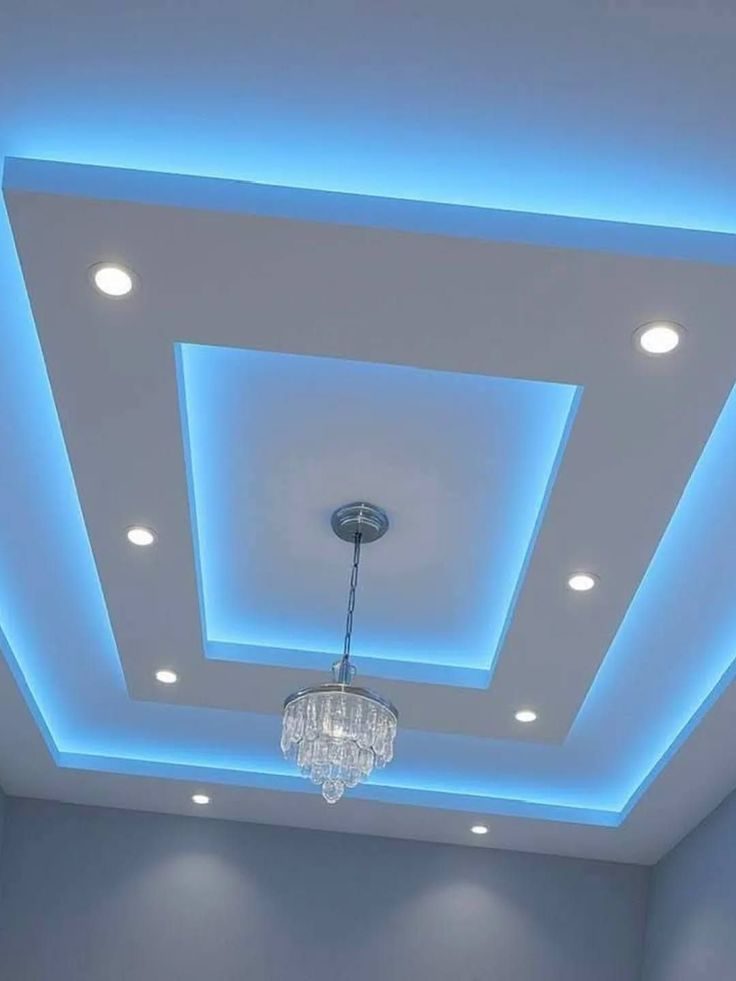
A floating tray ceiling adds immediate vertical depth to a room. It draws the eye upward, giving the illusion of higher ceilings. In Kenyan luxury homes, tray ceilings are frequently paired with a central decorative chandelier flanked by recessed spotlighting.
+-------------------------------------------------------+
|                 Perimeter Gypsum Frame                |
|   +-----------------------------------------------+   |
|   |         Recessed Center (Tray Area)           |   |
|   |            [ Main Chandelier ]                |   |
|   |   (Concealed LED Strip Lighting Channel)      |   |
|   +-----------------------------------------------+   |
+-------------------------------------------------------+
- Best For: Master bedrooms (framing the bed) and main living rooms.
- Design Tip: You do not need to cover the entire ceiling. A single, well-proportioned central tray over the main seating group is far more impactful than multiple smaller trays.
4. The Cove-Lit Ceiling
Cove lighting hides the light source entirely. The LED strip sits inside a custom gypsum trough, bouncing soft light off the upper ceiling plane and down into the room.
Because there are no visible bulbs or glaring points of light, cove lighting creates a relaxing, hotel-like atmosphere.
- Best For: Master suites, home theaters, and formal lounges.
- The Lighting Rule: Always coordinate electrical routing before framing. Building a beautiful gypsum cove and trying to fish electrical cables through it afterward leads to messy cutouts and structural weak points.
💡 Planning a renovation along the Coast?
High humidity and salty sea air require specialized framing and board selection. Read our comprehensive pricing guide: How Much Does a Gypsum Ceiling Cost in Mombasa? A Practical 2026 Guide
5. The Coffered Ceiling
If you want to create a stately, executive look, a coffered ceiling is the gold standard.
A coffered ceiling uses a grid of sunken square, rectangular, or octagonal panels framed by decorative gypsum beams. Historically made from heavy timber, modern coffered ceilings are constructed using lightweight galvanized steel channels and gypsum board.
- Best For: Formal dining rooms, executive home offices, double-height living rooms, and grand entrance halls.
- Warning: Coffered ceilings require vertical clearance. Do not install coffered designs in rooms with a slab height under 2.8m; the beams will make the room feel claustrophobic.
6. The Bedroom Feature Ceiling
Living room ceilings are meant to entertain; bedroom ceilings are meant to relax you. High-glare spotlights directly above a bed can be uncomfortable when lying down.
Instead of designing the entire bedroom ceiling, create a dedicated feature zone positioned directly over the bed.
- How It Works: A shallow gypsum drop extends slightly past the headboard, casting soft, dimmable indirect cove light down the feature wall and across the bed.
- Lighting Tip: Specify warm 2700K–3000K LEDs with dimmable switches so you can transition from bright morning prep to soft evening relaxation.
7. The Central Focal Feature
Sometimes a room does not need perimeter drops across every wall. It just needs one bold architectural anchor.
A central circular, oval, or geometric gypsum feature island creates an immediate focal point. It is commonly designed to house a statement lighting fixture, such as a modern glass chandelier, a sputnik fixture, or a woven pendant light.
- Best For: Round or square dining tables, double-height foyers, and formal reception desks.
- Critical Rule: Align with the furniture, not just the walls. If your circular central feature is aligned with the center of the room, but your dining table sits off to one side, the entire room will look unbalanced.
8. The Minimalist Bulkhead (Spatial Zoning)
In modern Kenyan developments, such as open-plan apartments in Westlands or Kilimani, the living room, dining room, and kitchen frequently share a single open floor space.
Building physical partition walls breaks up natural light and makes the apartment feel smaller. A minimalist gypsum bulkhead (150mm–200mm drop) solves this by creating visual zoning overhead.
[ Kitchen Zone ]          [ Dining Zone ]          [ Living Zone ]
(Flat Gypsum + Spotlights) (Perimeter LED Bulkhead) (Recessed Tray Ceiling)
-------------------------------------------------------------------------
                          Open Continuous Floor Area
- Best For: Defining functional areas in open-plan apartments and hiding HVAC ducting, curtain tracks, or plumbing lines.
9. The Geometric Statement Ceiling
For contemporary spaces that need high visual energy, geometric gypsum ceilings use crisp angles, diagonal channels, overlapping rectangles, or linear LED profile cuts.
- Best For: Modern entertainment rooms, commercial showrooms, boutique offices, and cocktail lounges.
- The BenPhil Rule: Choose one dominant geometry. If your ceiling combines circles, slanting angles, multiple steps, multicolor RGB lighting, and decorative cornices all at once, it becomes visually exhausting. Great design is about knowing what to leave out.
10. Gypsum + Wood Hybrid: Warmth Meets Precision
Gypsum provides clean, seamless, architectural surfaces, but it can sometimes feel cold. Combining crisp white gypsum bulkheads with warm wood-look fluted panels, dark walnut rafters, or timber slatted accents introduces rich texture into the room.
- Best For: TV feature walls extending into the ceiling, coastal villas, and warm contemporary lounges.
- Co-ordination Secret: Match the wood tone used on the ceiling with your internal doors, kitchen cabinetry, or TV console to create a cohesive interior design scheme.
11. The Coastal-Inspired / High-Humidity Spec
Designing a ceiling for Mombasa, Nyali, Bamburi, or Diani requires more than aesthetic choices. It requires environmental engineering.
High ambient humidity and airborne sea salt can cause standard gypsum boards to absorb moisture, sag between joists, or develop mold stains over time.
The Specification
- Board Selection: Use Moisture-Resistant (MR) Greenboard in coastal zones, bathrooms, and kitchens.
- Framing: Ensure framing channels are heavy-gauge galvanized zinc-coated steel (0.5mm+ thickness) to resist corrosion.
- Paint: Finish with high-grade anti-fungal, washable acrylic ceiling paint.
12. The "Invisible" Architectural Ceiling
This is the pinnacle of high-end luxury minimalism. The ceiling does not scream for attention with complex shapes. Instead, it is designed to disappear into the architecture.
It utilizes flush shadowline edges, trimless magnetic light tracks, and completely recessed downlights where the light source is hidden deep within the ceiling plane.
- Best For: High-end architectural homes, art galleries, and minimalist penthouses.
- Execution: Requires perfection from your fundi. Without decorative cornices to hide uneven edges, the jointing, skimming, and sanding must be flawless under light.
Technical Formula: How to Estimate Your Ceiling Area & Materials
Before calling contractors for quotes, it helps to understand how ceiling surface area is calculated.
For a standard rectangular room, calculate the base area (A):
A = Length (m) × Width (m)
Example: A 5m × 4m living room has a base floor area of 20m².
Factoring in Design Complexity
-
Flat Ceiling: Surface Area ≈ A (20m²).
-
Single Tray / Perimeter Drop: Add approximately 15%–25% extra area to account for vertical drops and internal cove lips.
A<sub>total</sub> = A × 1.20 = 24m²
-
Coffered / Multi-layered Design: Add 35%–50% extra surface area due to the high volume of vertical fascia boards and internal beam steps.
5 Critical Gypsum Ceiling Mistakes to Avoid in Kenya
❌ Mistake 1: Copying Pinterest Designs Without Checking Slab Height
A design that looks breathtaking in a double-height 50m² villa will look cramped and heavy in a 15m² apartment room.
❌ Mistake 2: Over-Layering the Ceiling
Adding three or more steps to a low-ceiling room can make the space feel heavy and reduce the sense of height.
❌ Mistake 3: Using Cheap, Ungalvanized Metal Studs
Cheap, ungalvanized metal studs can rust and eventually affect the stability and appearance of the ceiling.
❌ Mistake 4: Deciding on the Lighting Layout After Installation
Always plan the lighting before the gypsum boards are installed. This makes it easier to position spotlights, LED strips, and other fixtures correctly.
❌ Mistake 5: Rushing the Skimming and Sanding Phase
The difference between a cheap-looking ceiling and a luxury finish often comes down to surface preparation. Inspect the skimmed joints using a bright side-light before approving the final paint coat.
Ignoring Light Temperature (K Rating)
Installing harsh 6500K cool daylight bulbs in a relaxed cove ceiling can make a cozy living room feel uncomfortable.
For living areas and bedrooms, 2700K–3000K warm white lighting is often a better choice.
Using Standard Boards in Wet Zones
Avoid using standard gypsum boards in areas exposed to high moisture, such as bathrooms and some kitchen applications. Moisture-resistant boards are generally more appropriate for these areas.
For outdoor or coastal applications, the ceiling system should also be specified according to the conditions it will face.
Skipping Electrical Pre-Wiring
Always ensure your electrician plans the wiring before the gypsum technicians frame and seal the structure.
Electrical conduits, wiring tails, spotlight positions, and LED channels should be considered before the ceiling is closed.
The Master Contractor Checklist for Installation Day
Print or save this checklist before your gypsum installation team begins work on-site:
- Framing Steel Verified: Galvanized main channels and studs are checked against the specification, including appropriate thickness and spacing.
- Board Thickness Checked: Board thickness is selected according to the ceiling system, span, curves, and manufacturer's recommendations.
- Moisture Protection Verified: Appropriate moisture-resistant boards are used in areas where the ceiling system requires additional moisture protection.
- Joint Tape Applied: Self-adhesive fiberglass mesh tape or high-strength paper tape is applied to board joints according to the jointing system being used.
- Joint Compound Curing: Joint filler is applied in appropriate coats, with sufficient drying time between coats.
- Light Cutouts Pre-Marked: Spotlight positions are measured and marked according to the electrician's ceiling plan before cutting.
Frequently Asked Questions
What Is the Average Cost of a Gypsum Ceiling per Square Meter in Kenya?
In 2026, standard flat gypsum ceilings in Kenya typically start from KSh 1,500 to KSh 2,200 per m² installed. Designed ceilings with perimeter drops, coffered panels, or concealed LED coves generally range between KSh 2,500 and KSh 4,500+ per m², depending on design complexity, lighting integration, and location.
Which Gypsum Ceiling Design Is Best for a Small Living Room?
For compact living rooms, choose a Clean Flat Ceiling with a Shadowline Gap or a Slim Perimeter Drop.
Avoid deep multi-step trays or heavy coffered grids, as they can reduce headroom and make the room feel smaller.
Is Gypsum Ceiling Better Than PVC Ceiling for Kenyan Homes?
Gypsum provides a seamless, paintable finish and allows for built-in architectural lighting. PVC is moisture-resistant and can be practical for utility spaces and some bathrooms.
The better option depends on the room, moisture exposure, design requirements, budget, and installation system.
Can I Install a Ceiling Fan on a Gypsum Ceiling?
Yes, but the ceiling fan should not be anchored directly to the gypsum board.
The fan's mounting bracket should be securely fixed to the structural support above the gypsum ceiling, following the fan manufacturer's installation requirements. The gypsum ceiling should only accommodate the required opening and finish around the support.
Transform Your Space with BenPhil Interiors
A beautiful ceiling is not the result of choosing the most complicated design. It is the result of clean proportions, correct material selection, precise framing, and flawless execution.
At BenPhil Interiors, we design and install custom gypsum ceilings tailored specifically to your home's architecture, lighting plan, and budget. From modern Nairobi apartments to luxury coastal villas, our master technicians deliver clean lines and long-lasting quality.
Ready to Build or Renovate Your Ceiling?
Send us your floor plan or room measurements for an itemized design consultation and quote.
📲 Click Here to WhatsApp BenPhil Master Craftsmen
📞 Call Us: +254 107451486
📍 Coverage: Nairobi, Kiambu, Machakos, Nakuru, Mombasa, Diani, Kilifi & across Kenya.
Have a project in mind?
Get a free consultation and rough quote within hours.
.jpg)
.png)